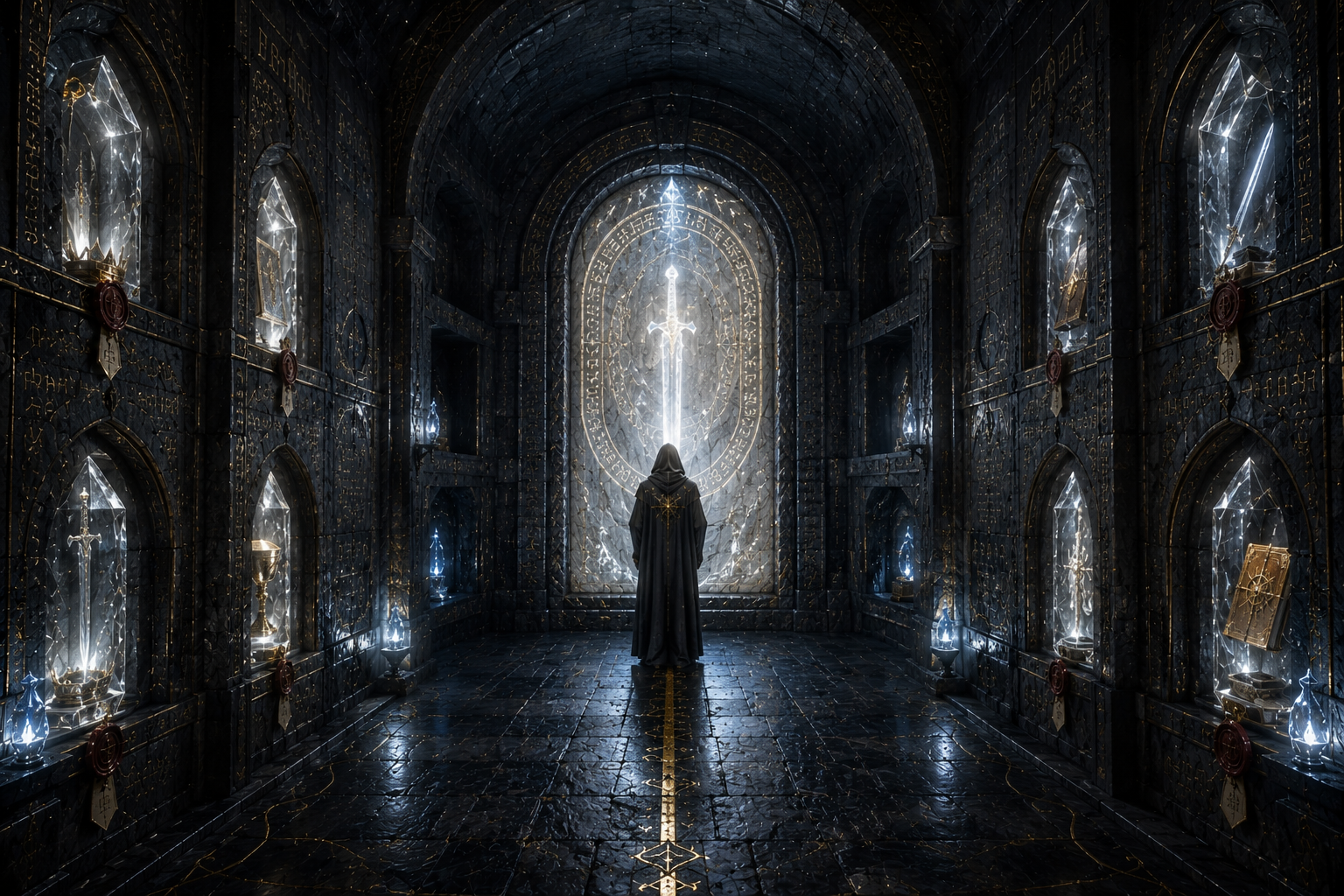
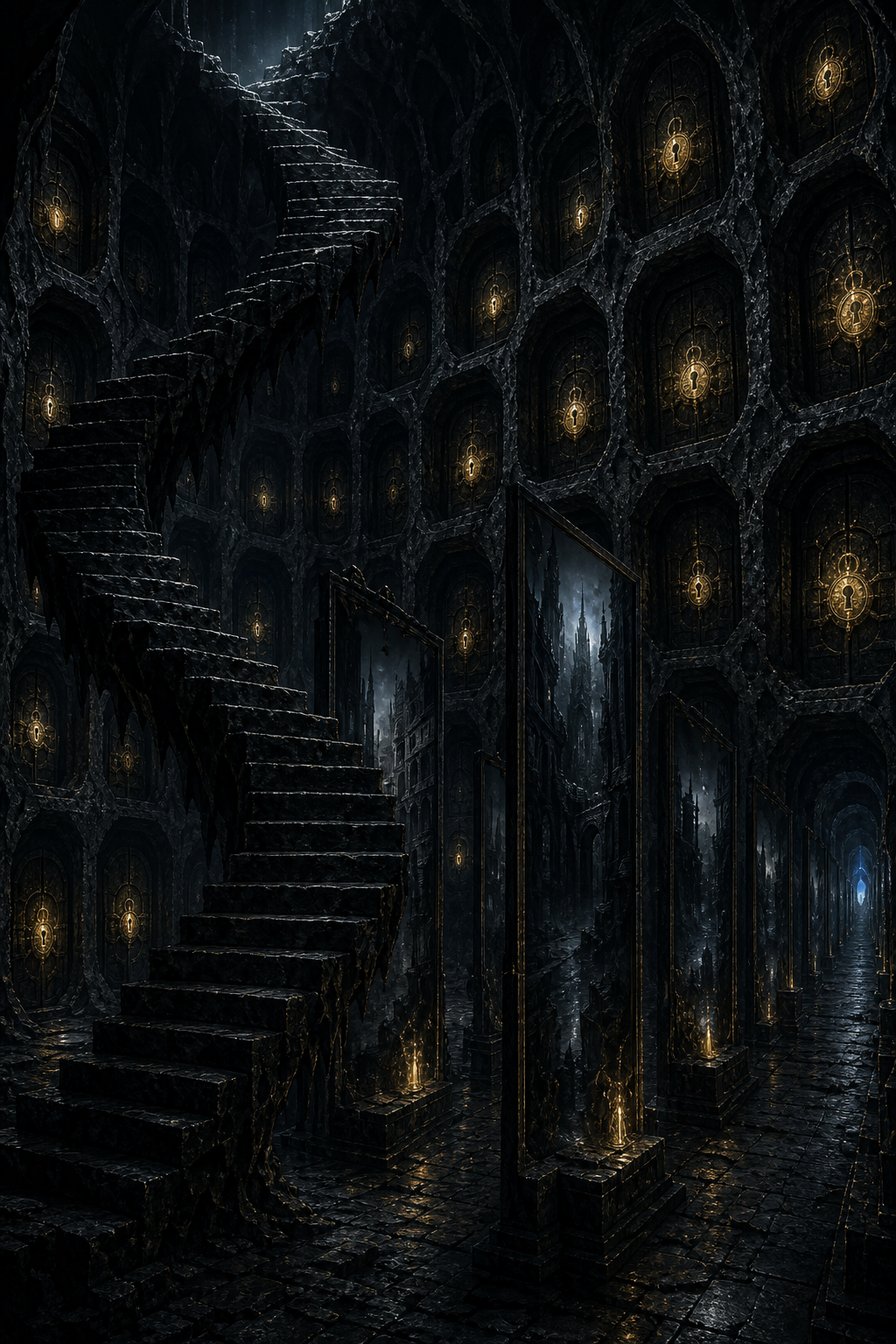
Identity & Atmosphere
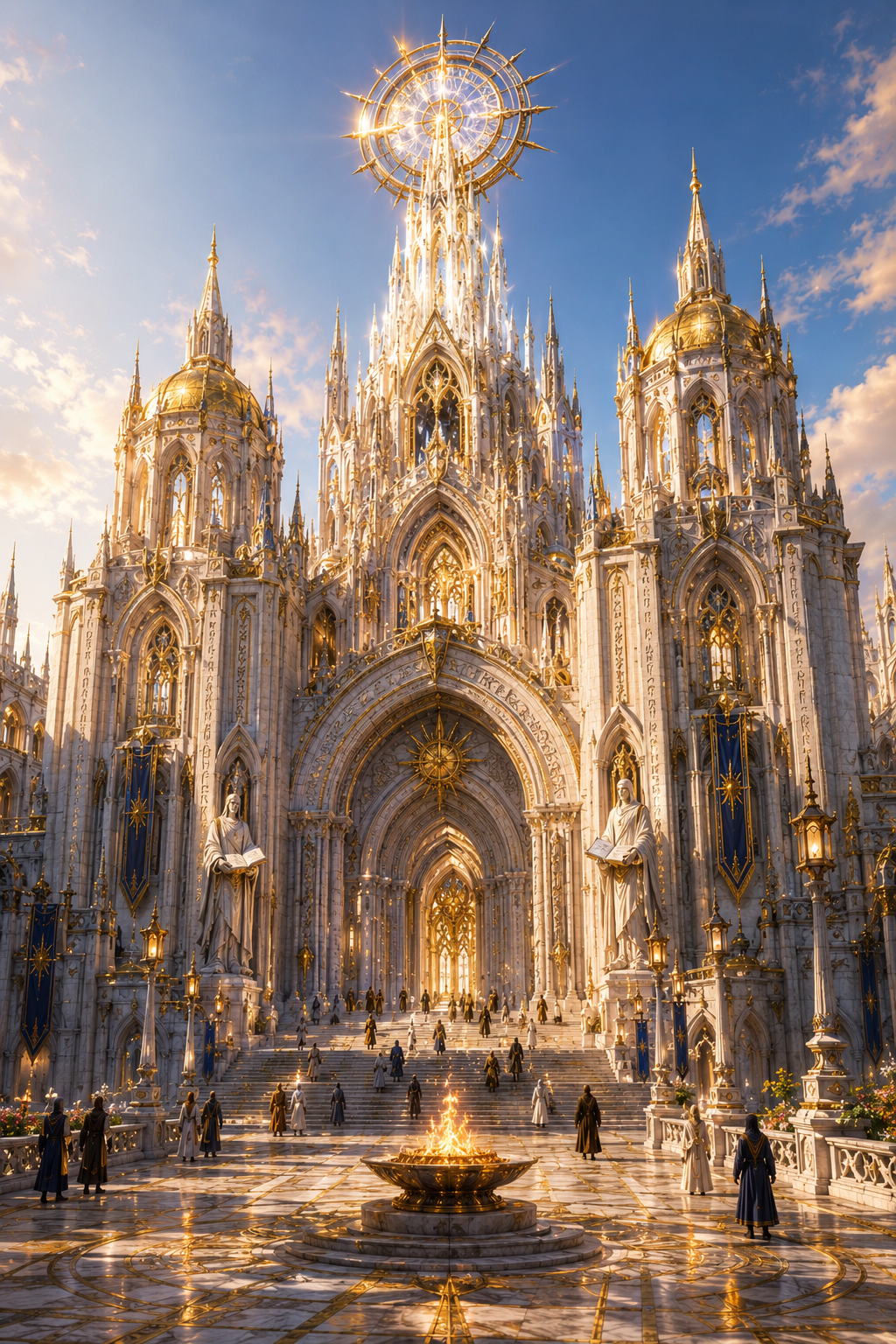
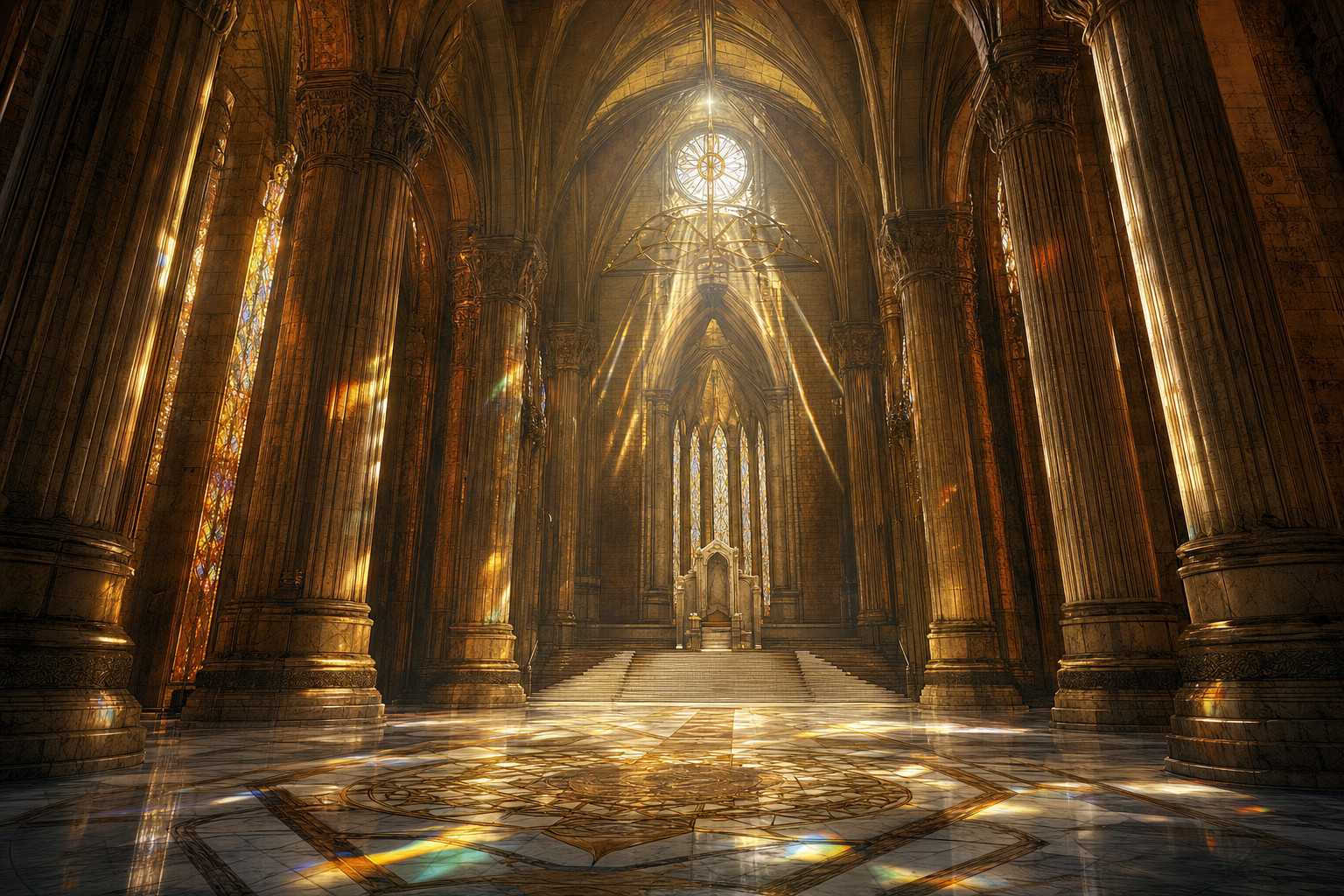
Luminara Sanctum does not feel like a school. It feels like an argument between beauty and severity that resolved into architecture. The limestone glows faintly at dusk — an optical property of the quarry it was sourced from, though the Sanctum's literature has always allowed the impression that the stone itself produces light. The colonnades are wide enough to walk three abreast, the ceilings are high enough that sound behaves differently than it does anywhere else, and the gardens at the centre of each residential cluster are tended with a precision that communicates exactly how much attention the institution pays to everything within its walls.
The atmosphere is reverent without being warm. Faculty address students by their Noble House affiliation before their name. The morning bell sequence — five tones, each corresponding to one of the founding orders — has not changed in four centuries. The library's restricted section requires three separate approvals to access and has never once been described by anyone who received all three.
What the Sanctum teaches, formally, is the management and application of Light magic across every domain of Solarian life. What it actually teaches, structurally, is how to want the right things — how to understand Solaria's doctrine not as a constraint but as the correct shape of ambition. Students who leave having absorbed this lesson become the continent's administrators, diplomats, and High Aurelians. Students who leave having questioned it become people the institution quietly removes from its records.
The Triarch Council
Three offices directly beneath the High Aurelian. Each governs one arm of the Sanctum's operation. They do not govern equally — the Magistrate and the Marshal have, over centuries, learned to act before the Archon finishes speaking.
Academic and philosophical head of the University. Oversees all research and magical education. Known for progressive ideals and the mentorship of exceptional students. Has tried, with decreasing success, to protect the institution from doctrine — and doctrine from the institution.
City governance, law, trade, diplomacy, and internal order. Cold, precise, and politically brilliant. Believes Light must be controlled and rationed. When the Archon's protections conflict with civic law, she enforces civic law. The conflict does not trouble her.
Commands the Sanctum's military — the Sunward Paladins, the Lightguard, and the Aegion Sentinels. Upholds divine law and protects relics within and beyond the city walls. The enforcement arm of everything the Triarch decides, and everything it chooses not to decide openly.
The Cell System — Ranking & Placement
Students at Luminara Sanctum are organized into ranked cells — competitive teams that train, advance, and are evaluated together. Cell assignment appears to be based on aptitude assessment. In practice it is a political decision about where each student can be most usefully managed. The ranking system rewards precision over creativity, compliance over instinct, and institutional legibility over genuine power. This is not a flaw. It is the design.
Higher-ranked cells receive better equipment, housing privileges, stipends, and political insulation. Lower-ranked cells receive surveillance. The system creates the illusion of meritocracy while reinforcing hierarchy — and has accidentally produced a secondary aristocracy of Rankbound Families whose entire generational standing depends on their children's compliance.
Not a team — a symbol. One member by institutional design. Cael's Light does not surge; it endures. His mastery is scale, stability, and permanence. He does not defeat opponents — he removes their options. Exists to answer a question the Sanctum rarely states out loud: what happens when Light is perfected by the system?
Varros Dawncrest (captain), Elayne Dawncrest (tactical controller), Saelis Morn (mobility specialist), Dessa Kryne (formation anchor). They dominate when the crowd is watching and orders are clear. They struggle against subtlety, ideological contradiction, and quiet defiance — which is precisely why they cannot sit at Rank 1.
Elayne Dawncrest (strategic architect), Veyra Konn (infiltration), Orin Pellix (systems analysis and counter-doctrine), Dessa Kryne (defensive failsafe). Their doctrine: if a fight is visible, it has already gone wrong. Solaria hides its most dangerous minds here where they can be watched.
Pell Solmira (metrics overseer), Iria Solmira (resource allocator), Tovan Krell (behavioral auditor). Their Light does not glow — it hums like machinery. Their function is institutional maintenance disguised as academic competition.
Not placed by merit. Placed by institutional necessity. Students whose raw ability, independent thinking, or social position makes them statistically problematic are assigned here. Veilwalker is not a punishment — it is observation. The students placed there are often more capable than their rank suggests. The system is aware of this. That is precisely why they are here. This is where Asura was placed. This is where things went wrong and right simultaneously.
The Council of Nine Lamps
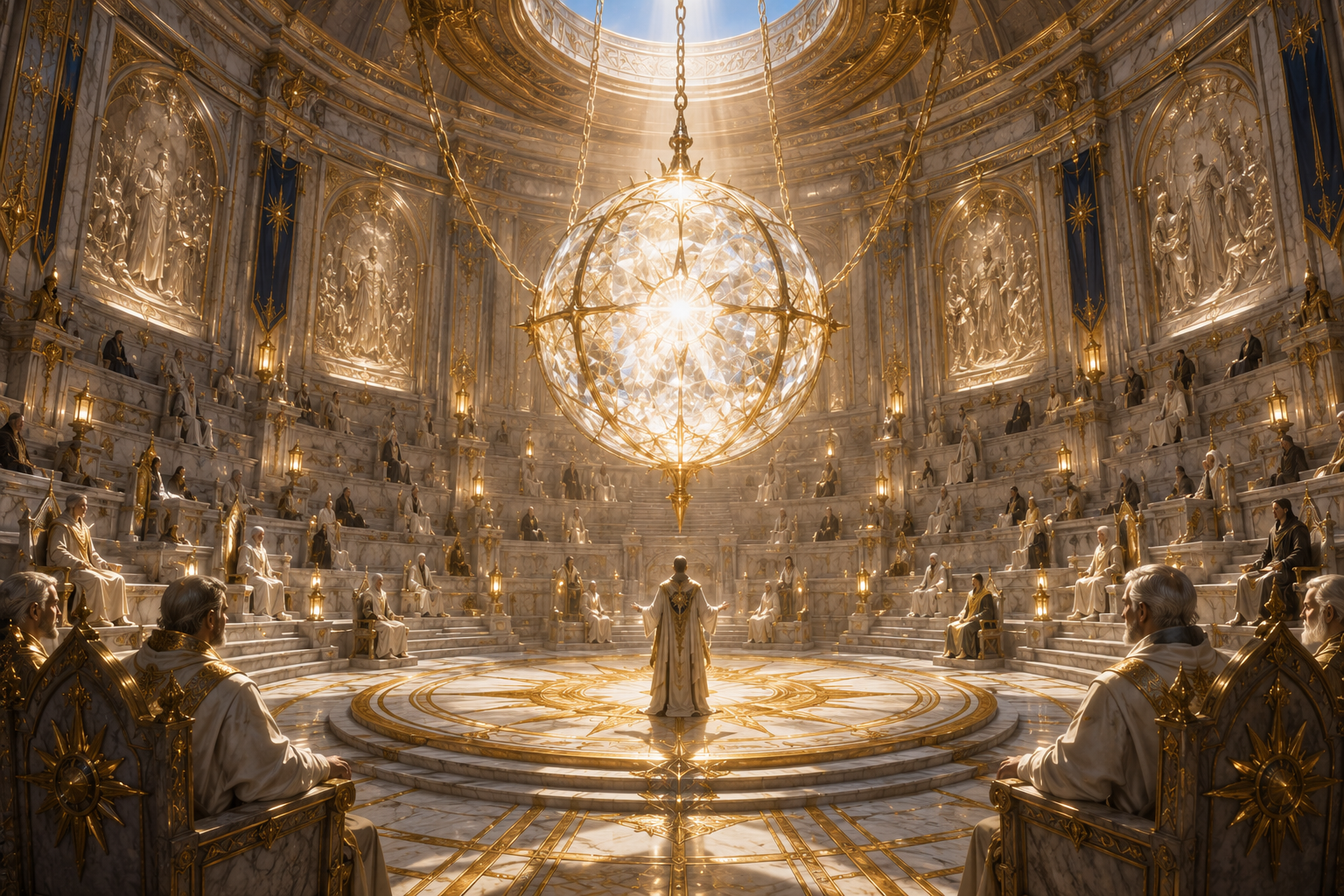
Nine Deans, each governing one of the Sanctum's major administrative divisions, who hold binding vote on matters of student discipline — including expulsion. All nine voted on Asura's exile. The vote was not unanimous. The margin was not comfortable. The record of how each Dean voted is sealed in the Restricted Archive.
Stern, devout, unyielding. Converts scripture into living sigils. Has advocated for the exile of students who exceed doctrine on multiple prior occasions. His vote was the first cast. The motion was his from the beginning.
Emotional and musical — believes in magic through song and in the living quality of raw Lightweaving. One of two Deans who voted against expulsion. Her opposition was formal, on record, and did not change the outcome.
Scientific, radical, curious. Known to have illegally preserved samples of unusual resonance from prior student cases. Voted to expel — his reasoning cited institutional precedent rather than belief. He has not discussed it since.
Prophetic, serene, and logical. Reads outcomes rather than takes positions. Voted to expel after projecting that any other result would require resources the institution was not prepared to allocate. She was not wrong.
Visionary and impulsive. Has publicly defended students the system targets on multiple occasions. The second Dean who voted against expulsion. His reasoning: what Asura demonstrated was a containment research opportunity the Sanctum was discarding out of fear rather than principle.
Gentle, empathetic, and moral. Argues consistently for measured responses over institutional punishment. Voted to expel under sustained pressure from the Council's ideological majority. Her final position was a conditional one recorded as a standard vote.
Stoic and wise. Views ideological challenge as necessary growth — and voted to expel regardless. His written statement has never been released. Whether it contains a justification or an apology has not been established.
Paranoid and scarred. Fears deep relic connections that exceed sanctioned parameters. His intelligence assessment of Asura's resonance with certain sanctified objects was the document that changed two previously undecided votes. Its full contents remain above standard Restricted Archive clearance.
Ambitious and disciplined. Views exceptional raw talent as competition rather than progress. Cast the confirming expulsion vote on the second ballot, citing "institutional stability" as her sole recorded justification. She has since been promoted within the faculty structure.
Noble Houses of the Sanctum
Five Noble Houses govern Luminara Sanctum's social and political structure beneath the High Aurelian. They are hereditary Light custodians — rank determined by proximity to the Church, control over Lumen Script infrastructure, military contribution, and academic influence. Every Great House agrees on one thing: Light must govern the world. They violently disagree on how. The High Aurelian does not resolve these disagreements. He exists above them.
Direct descendants of Seraphiel Valen Dorncrest, the man who rewrote Solaria's founding philosophy and built the current order from its bones. The ruling house. Law, faith, and authority converge here. Maltheon Veris, High Aurelian, is calm, immaculate, measured, and impossibly patient. He allows the noble houses to clash because conflict reveals loyalty. He never resolves disputes directly — he reframes them. This makes him untouchable. House Veris does not fear House Vey. It fears what happens if people remember Vey was ever right.
The military-clerical enforcement house. Deep ties to the Keeper's Guard and heavy influence over rankings and tournament referees. Advocates force-projection doctrine: Light as weapon, Light as deterrent. Lord Commander Lucien Dawncrest is a tactical genius who believes Light must be enforced, not debated. Captain Varros Dawncrest is the public champion — decorated, propaganda-ready, and certain his cruelty is service. Elayne Dawncrest, sidelined by house politics, is far more dangerous than either of them.
Archivists, historians, and record-keepers. They know the truth of Solaria's founding — and they hide it perfectly. Not out of cowardice. Because revelation without preparation would collapse the state, and the state collapsing would destroy the archive along with everything else. High Archivist Aurelius Arden is soft-spoken and unassuming. He knows more than anyone alive. House Arden is waiting for the world to be ready to receive what they hold. They have been waiting for a very long time.
Administrators of rankings, resource distribution, and institutional incentives. They believe stability is mathematical and power is not moral — it is statistical. Anomaly equals risk. Prefect Alaric Solmira designed Solaria's ranking economy, a system so efficient at producing compliance that no one who benefits from it questions whether compliance was the right goal. They are underestimated consistently and leveraged constantly.
Once the heart of Solarian Light philosophy. Aurelion Caelum Vey — the true founder — believed Light existed to be shared, not hoarded. His philosophy was erased, his name canonized into harmlessness, and his house reduced to a ceremonial relic. House Vey survives by appearing harmless. They are not harmless. Their original philosophy — Light understood, not commanded — remains the most dangerous idea in Solaria, because it makes every other house's claim to authority illegitimate at its root. The institution watches them constantly. They speak carefully. Lord Emeritus Cassian Vey mourns what was.
District Atlas
The Sanctum's campus is divided into twelve districts, each with a designated magical resonance grade reflecting the density and quality of Light magic saturation in that area. Resonance grade affects training difficulty, research capability, and — in ways the institution prefers not to quantify — the psychological atmosphere of daily life within each district.
| District | Function | Resonance | Notes |
|---|---|---|---|
| The Aurelian Spire | High Council, Triarch offices, ceremonial chambers | S | Highest resonance on campus. Being in proximity for extended periods without training produces disorientation in unacclimated visitors. |
| The Radiant Courts | Order of the Radiant Lance training grounds | A | Combat magic residue builds over centuries of use. The air tastes different here. Experienced practitioners describe it as electric. |
| The Stillwater Quarter | Order of the Still Flame, medical facilities | A | Healing resonance creates an unusual calm. Students assigned here sleep more deeply than those in other districts. |
| The Archive Depths | Gilded Archive Order, library, Restricted Archive | S | Memory-preserving resonance. Documents stored here degrade at approximately one-third the rate of external storage. The Restricted section has higher resonance than the Spire itself. |
| The Watching Galleries | Order of the Veiled Eye operational spaces | A | Detection resonance. Surveillance magic is easier to cast and harder to resist within this district. Students here are taught early that the environment will work against deception. |
| The Word Gardens | Order of the Sunken Word, diplomatic studies | B | Communication resonance. Spoken magic carries further here. Whispers in certain parts of the gardens can be heard at distances that geometry does not explain. |
| The Meridian Halls | Order of the Bound Meridian, ward construction labs | B | Containment resonance. Wards constructed here are measurably more stable than those built elsewhere. Also the most physically uncomfortable district — the resonance creates a pressure sensation that students adapt to over months. |
| The Open Quarter | Order of the Open Hand, experimental research | C | Lowest resonance on campus. This is either because experimental work is best done without resonance interference, or because the district's history of anomalous results has left the local field unstable. Faculty dispute which explanation is correct. |
| The Residential Clusters | Student housing, House common areas | B | Variable by cluster. House Veris residential areas test significantly higher than House Solmira areas. Whether this is designed or emergent is unresolved. |
| The Luminous Plaza | Central gathering space, ceremonial ground | A | High ambient resonance from centuries of group magic events. The graduation ceremony's final benediction, performed here annually, has measurably reinforced the plaza's field each year since the Sanctum's founding. |
| The Threshold | Entry, visitor processing, administrative front office | C | Low resonance by design — the institution prefers that visitors experience the Sanctum's power as something encountered gradually rather than immediately. |
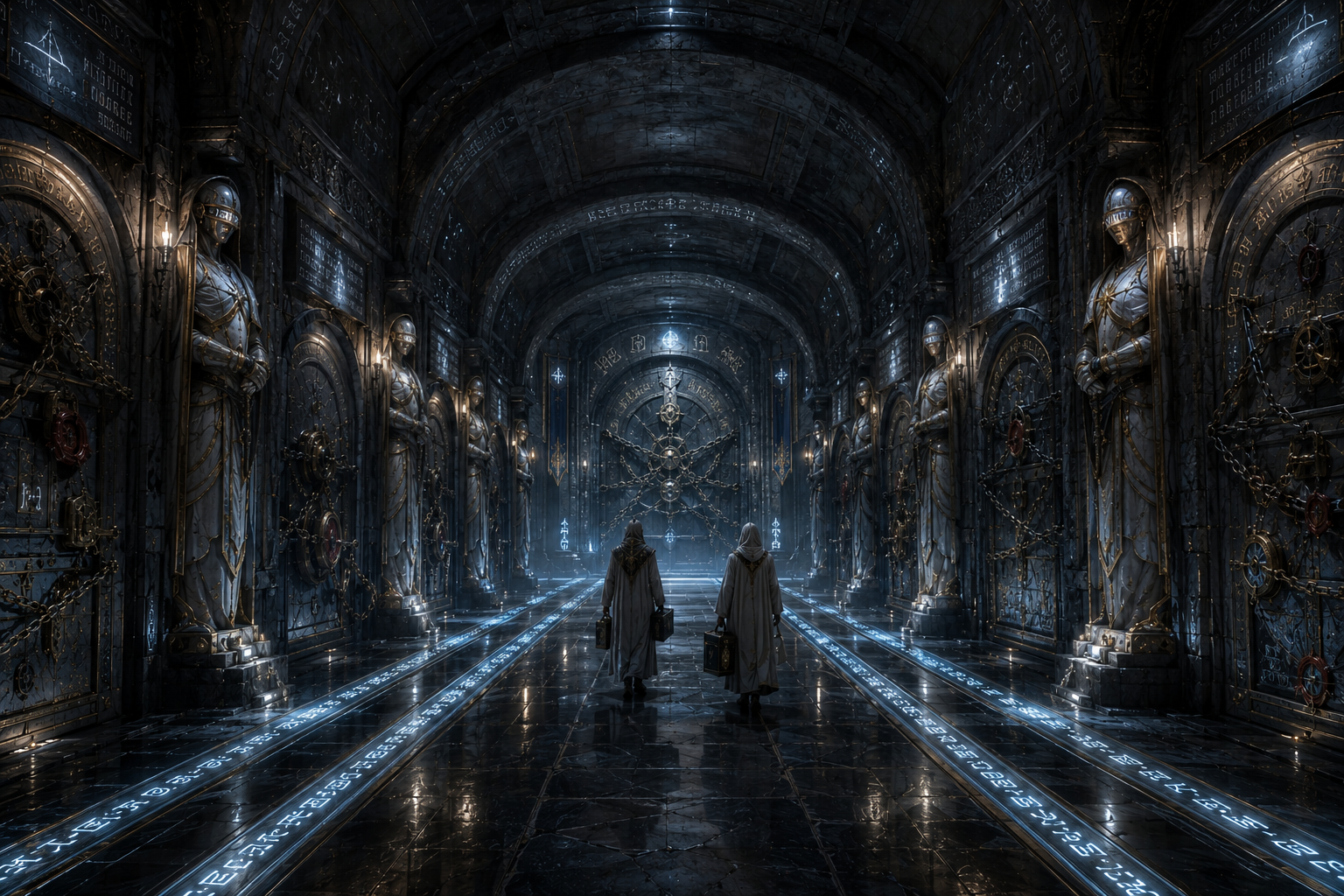
| The Underspire | Sub-basement infrastructure, original foundation | S | Off-limits to students. The original limestone foundation predates the Sanctum by an unknown period and has never fully been surveyed. Resonance here is of a different quality than anywhere else on campus — not Light magic, exactly. Something adjacent. |
Asura — The Exiled Student
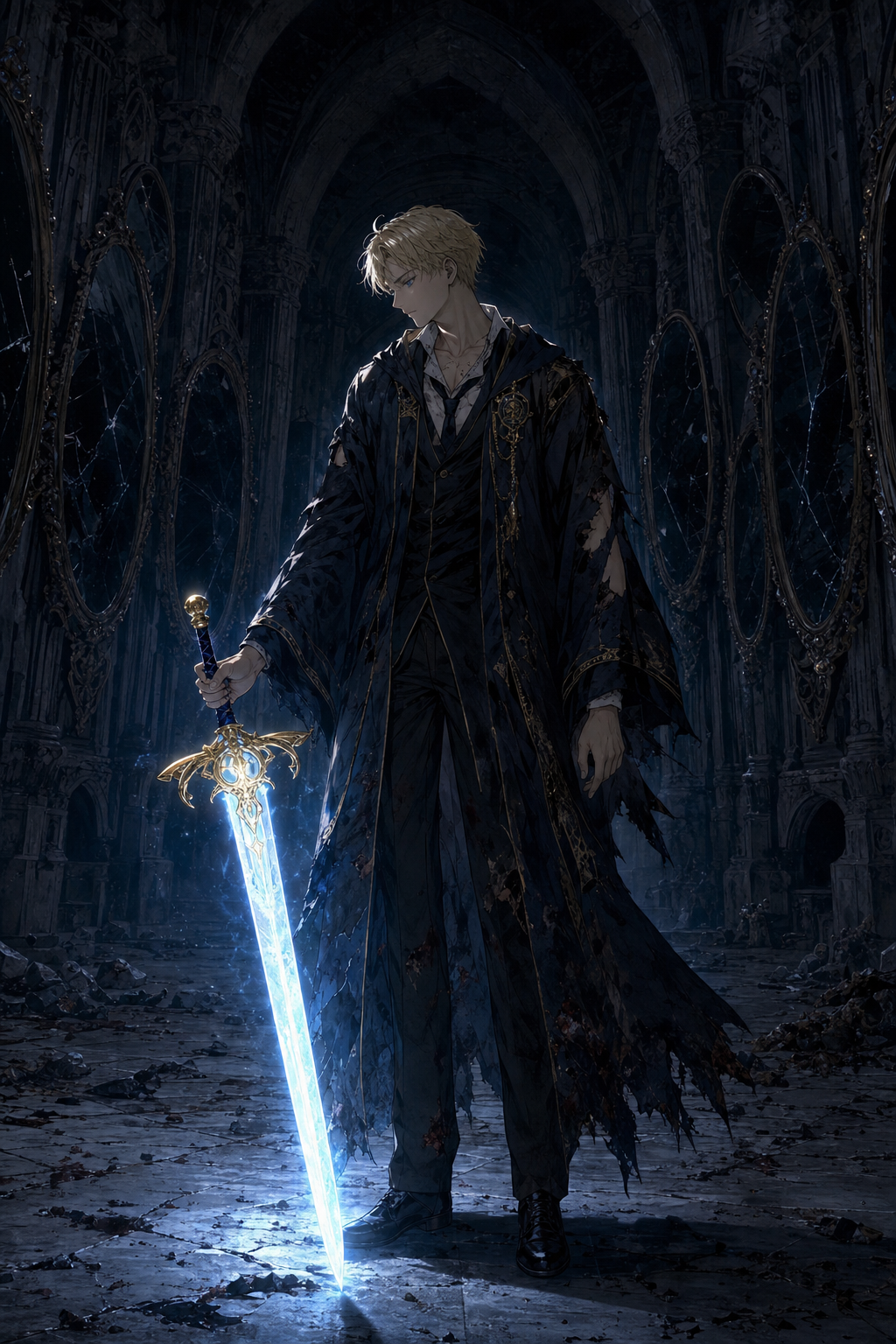
The Sanctum does not discuss Asura by name in any current documentation. The expulsion record exists in the Restricted Archive under a case reference number. What is known from the Council of Nine Lamps vote record: a student of the Veilwalker Cell — the containment placement for students whose ability, thinking, or social position makes them statistically problematic — demonstrated abilities the Council deemed incompatible with Sanctum doctrine. Specifically: the simultaneous interaction with both Light and Dark magical resonance, which Solarian doctrine holds to be theoretically impossible and practically dangerous. The trial was theater. The verdict was predetermined. The vote to expel was 7-2. The student was given one day to collect personal effects. The Threshold gate was sealed behind them.
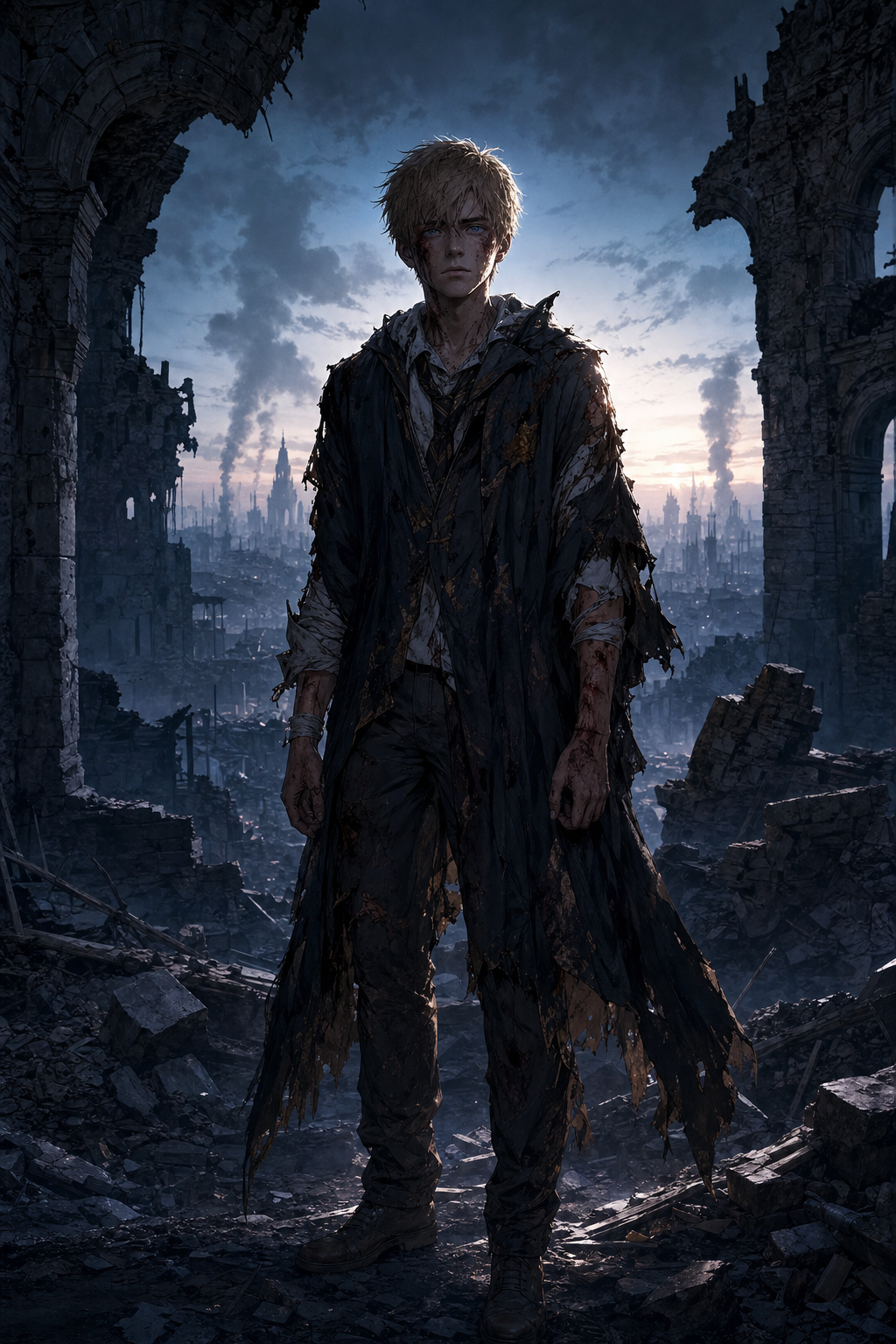
What the Sanctum's record does not capture is everything that happened after. The student they exiled did not become what they feared. They became something the institution's entire framework had no category for — and will eventually return to a Sanctum that spent years trying to decide whether to be afraid or relieved. When Asura left, the Sanctum lost the only practitioner in a generation who might have resolved the Fae's growing concern about Solaria's founding secret. The institution does not know this. It processed his exile as the removal of an anomaly.


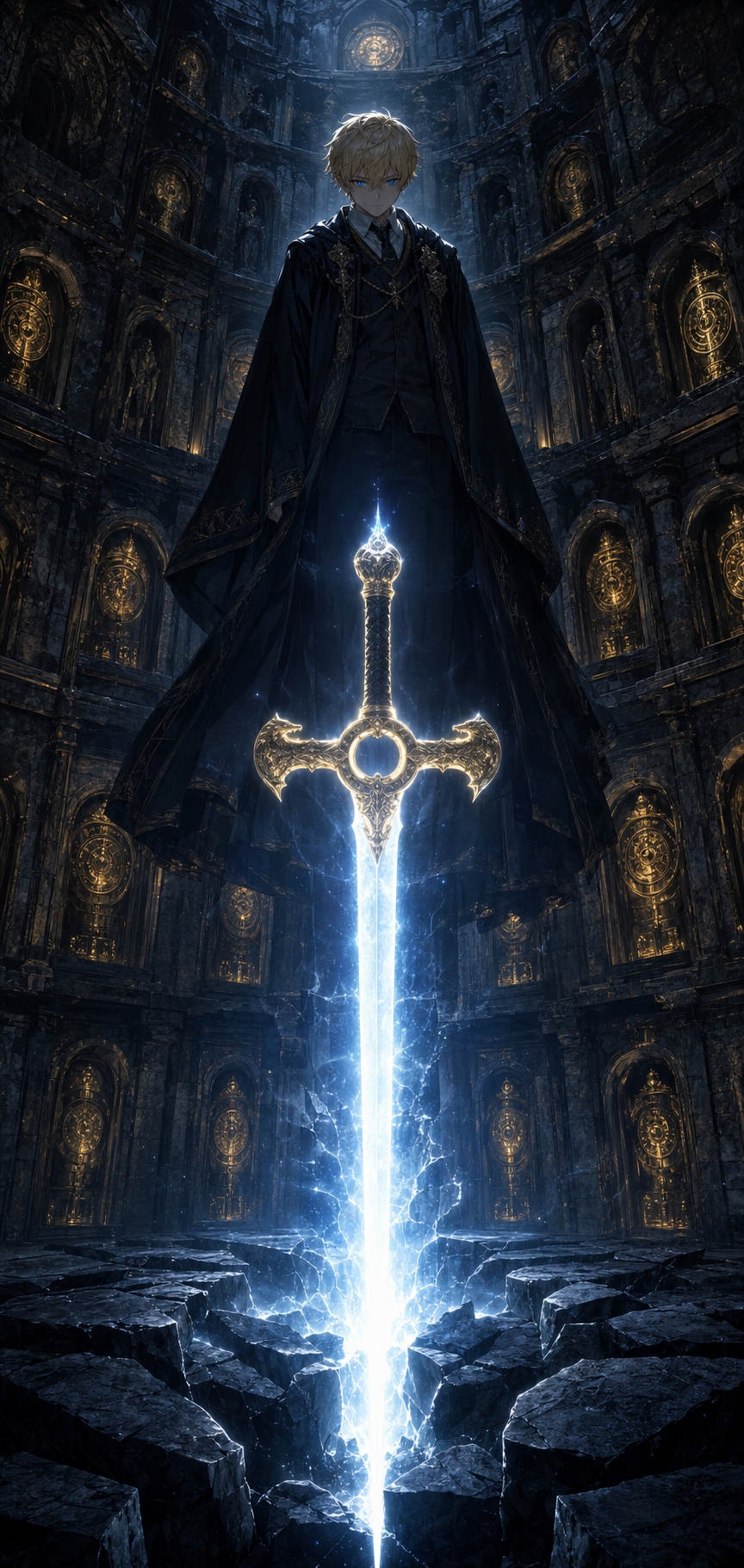
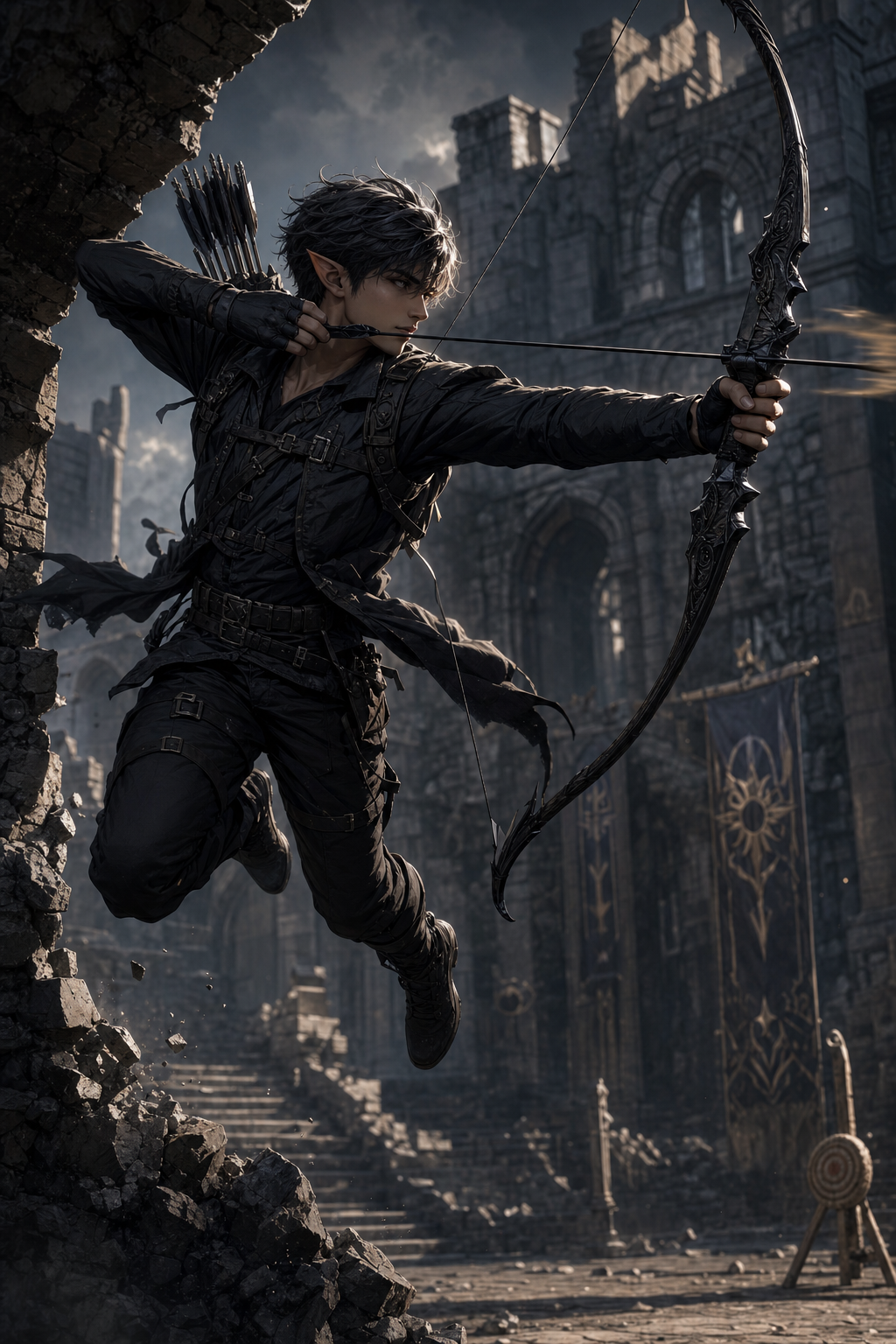
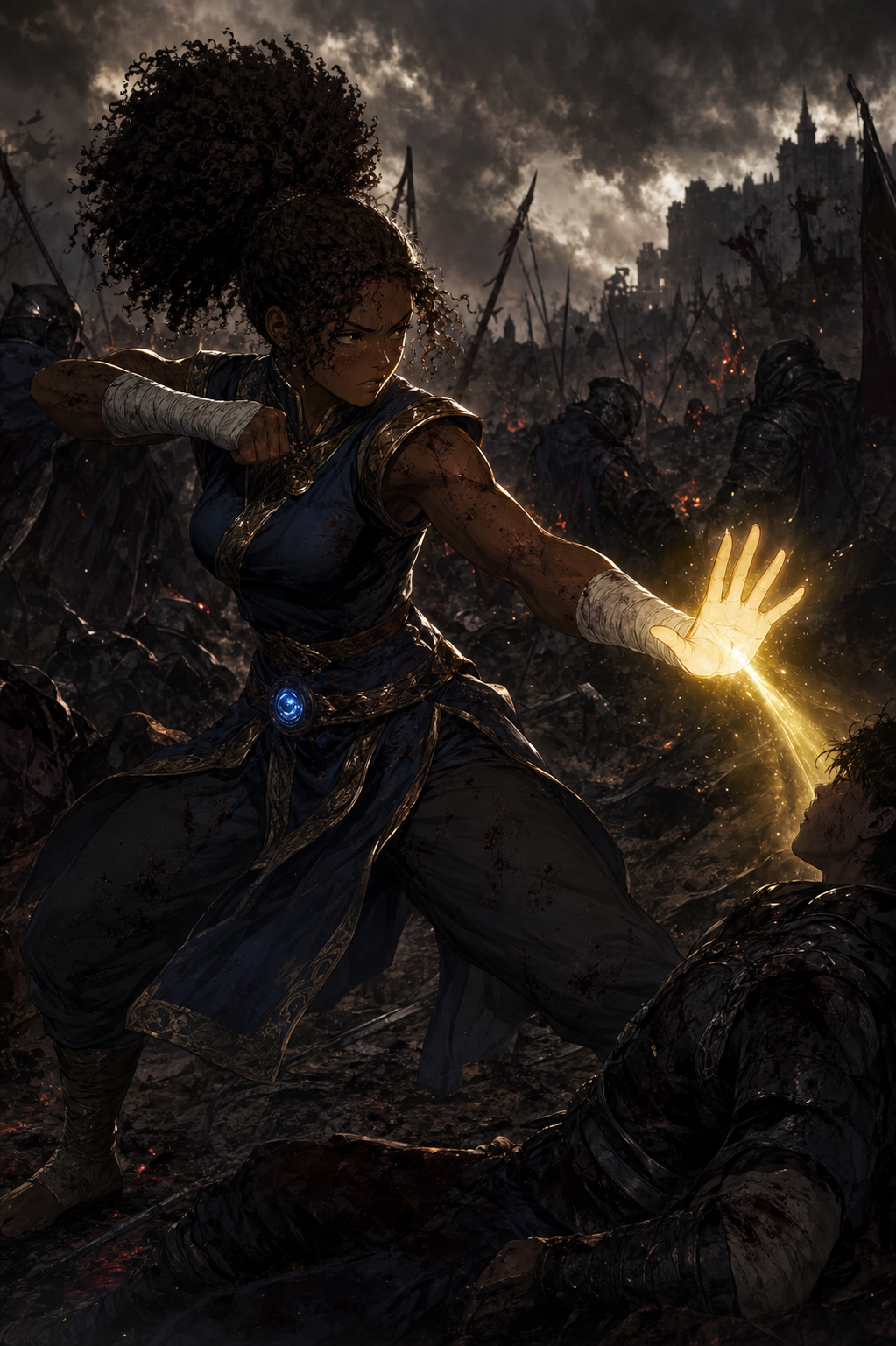
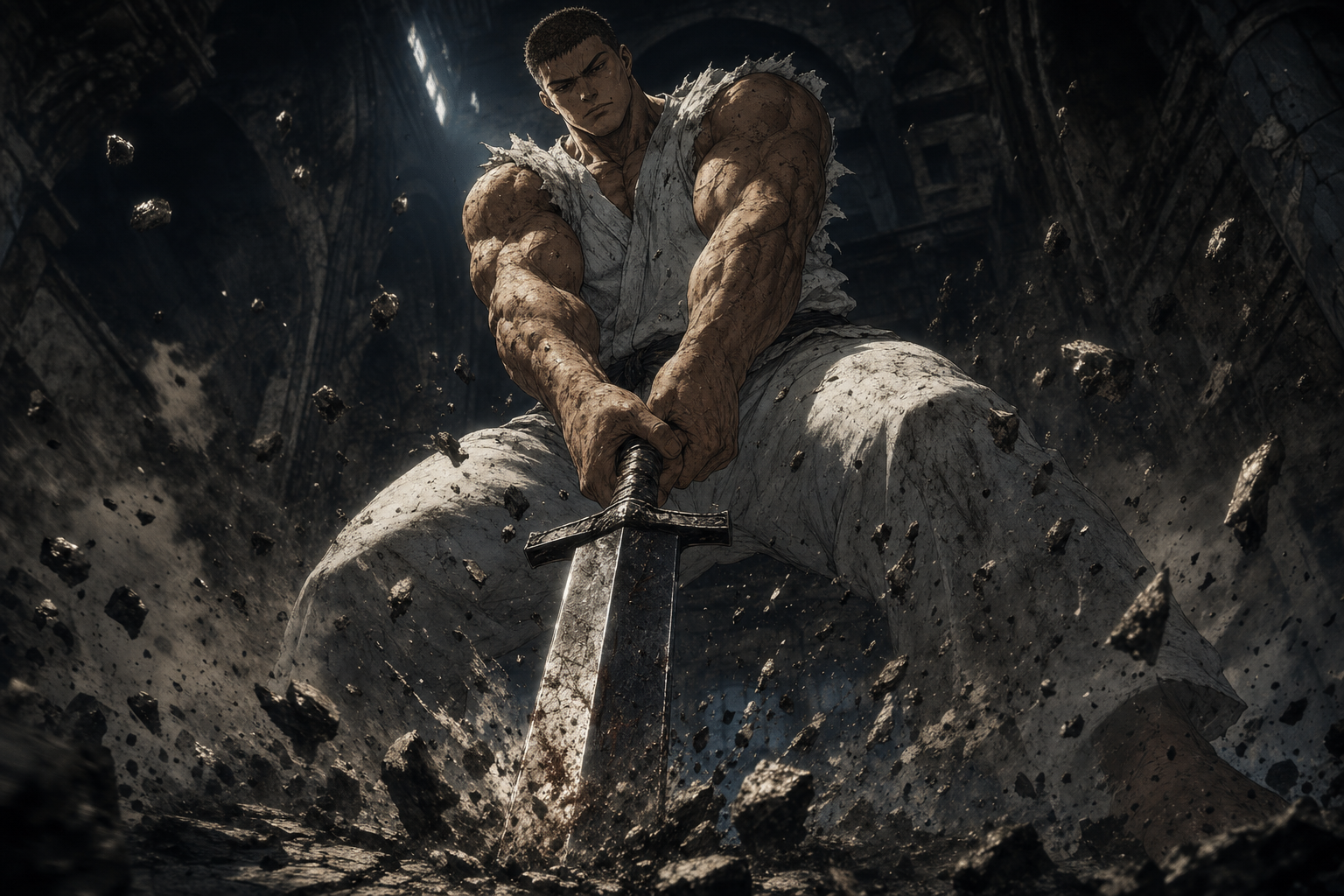
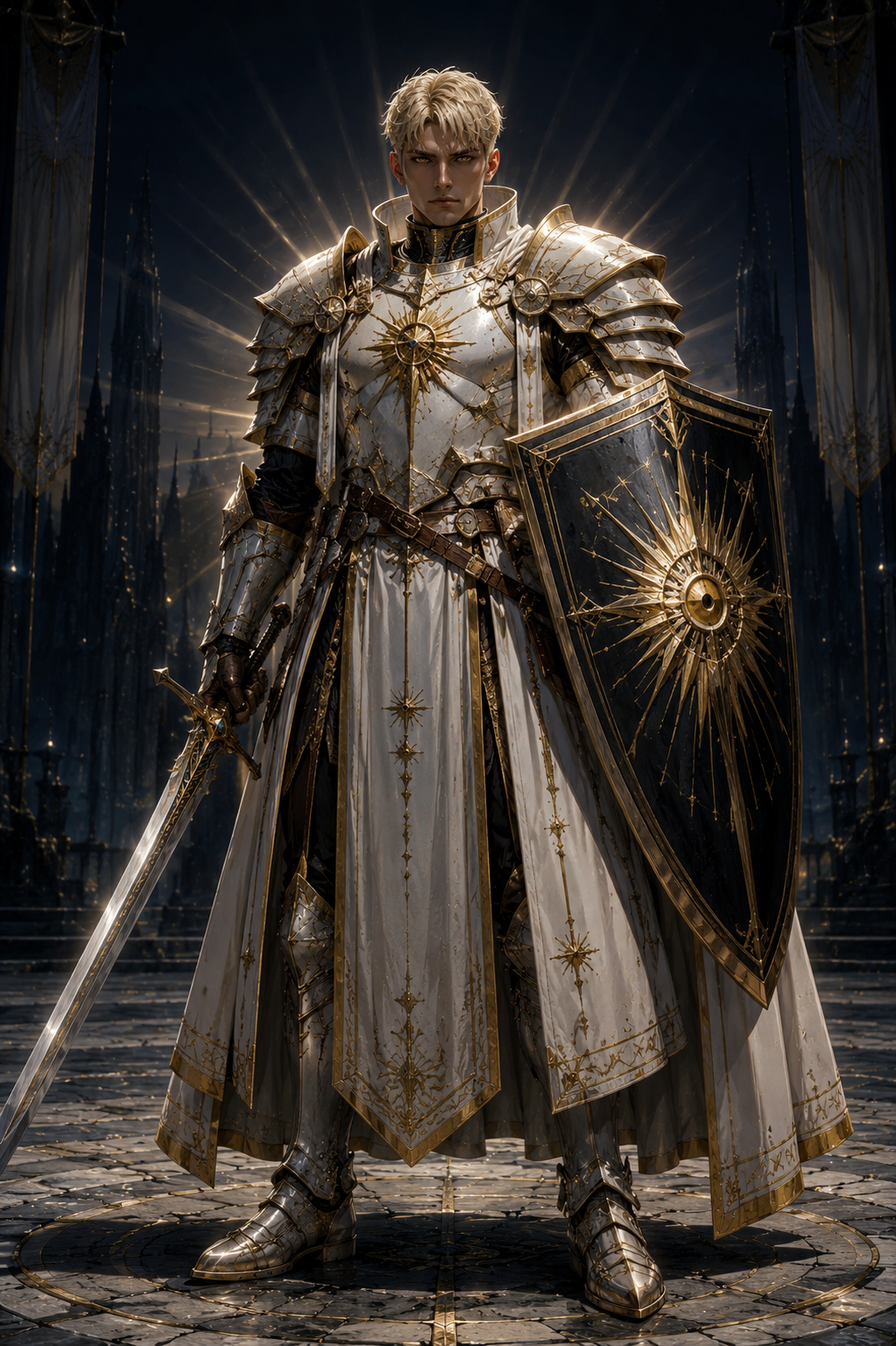
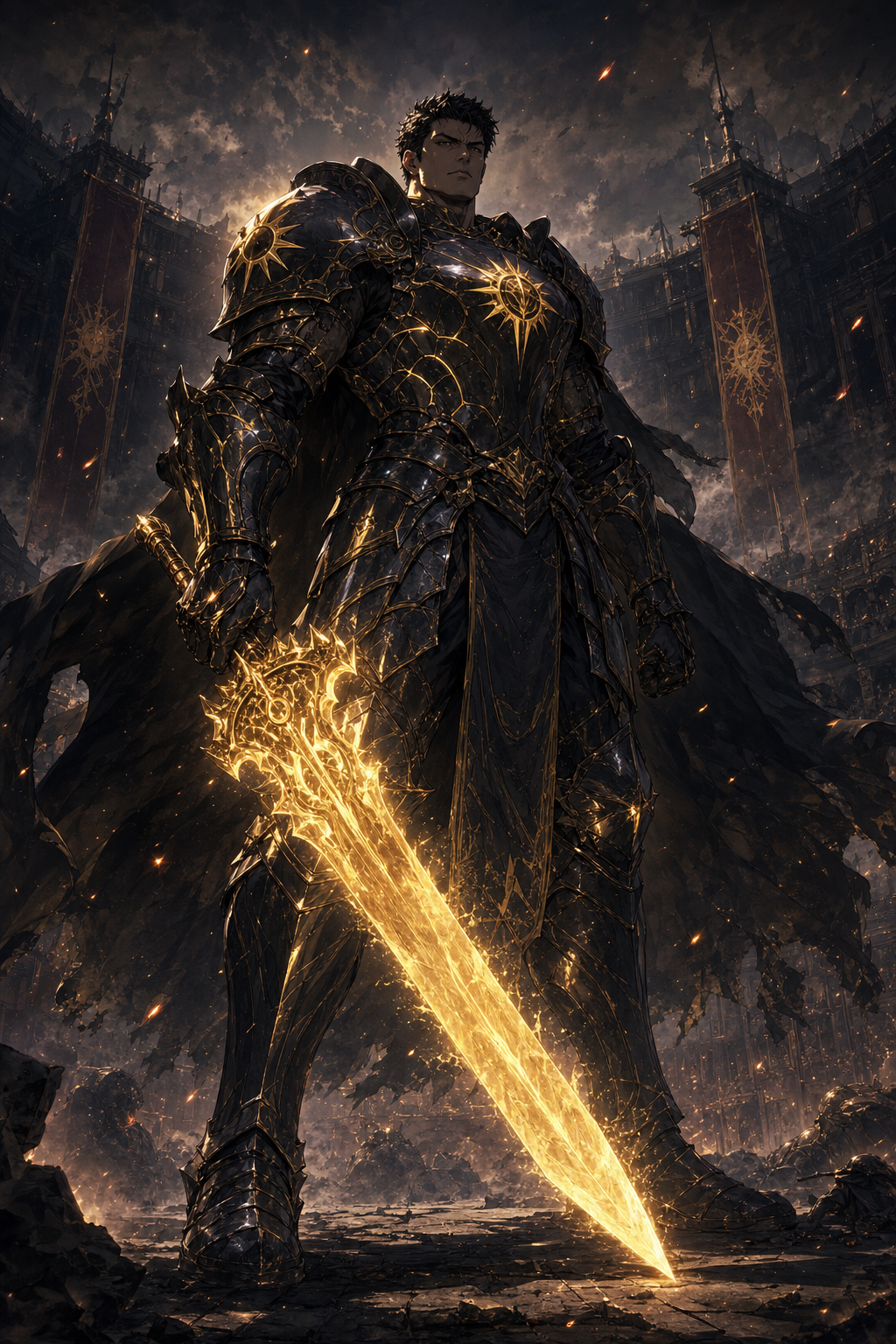
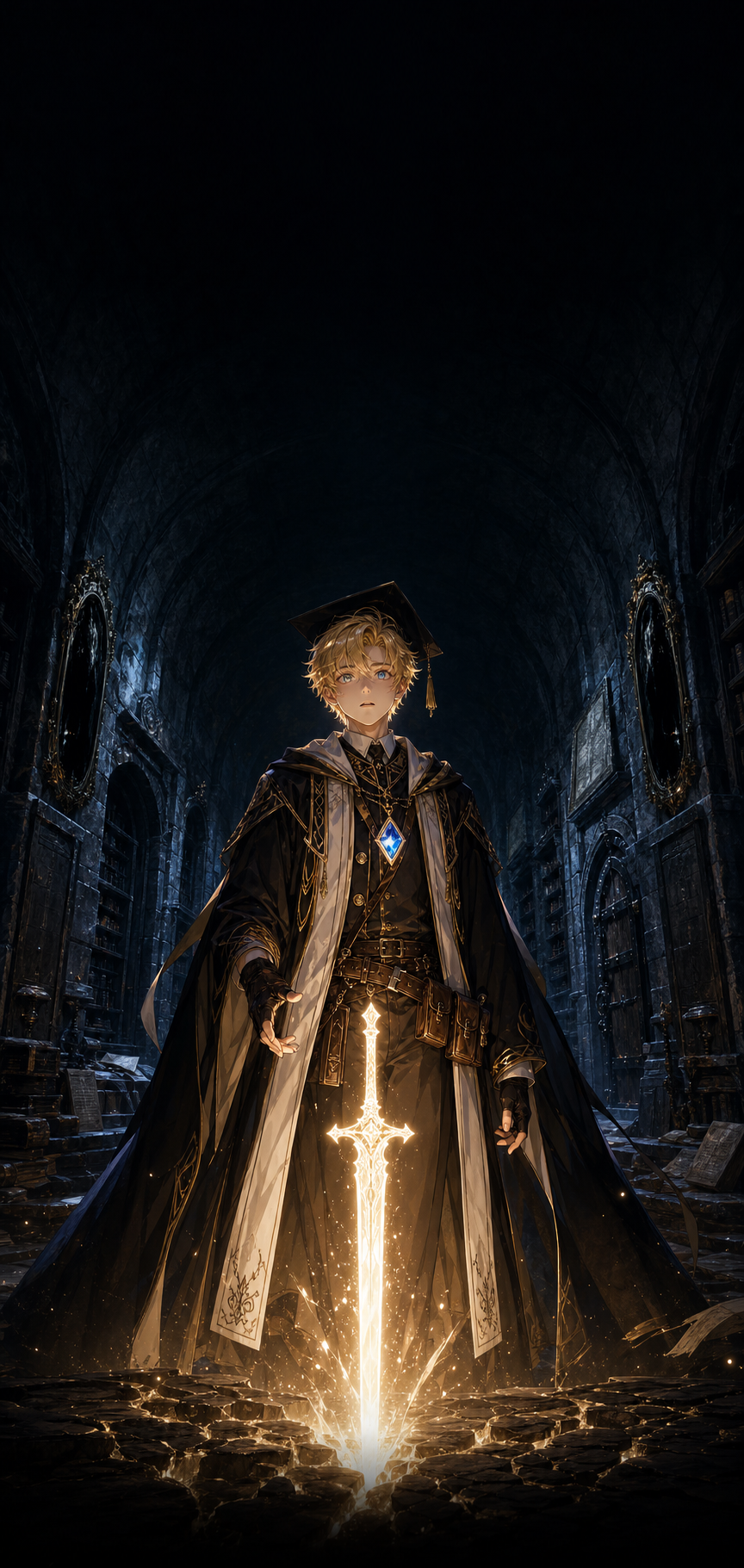
Luminara Sanctum — Concept Art
Official concept art of the holy city-state of Solaria and the halls of Luminara Sanctum.